100% of Patients at Military Hospital 103 Now Receive Electronic Medical Results

On the afternoon of June 25, a delegation from the General Department of Logistics and Technical Services, led by Major General Do Anh Tuan, Deputy Director of the General Department, inspected the implementation of Phase 2 of the electronic medical record (EMR) system at Military Hospital 103 under the Vietnam Military Medical University.
The working session was attended by Major General Nguyen Truong Giang, Director of the Military Medical Department; Major General Nguyen Van Nam, Deputy Political Commissar of the Vietnam Military Medical University; and Major General Luong Cong Thuc, Director of Military Hospital 103.
According to the inspection results, Military Hospital 103 has actively implemented directives and guidance from higher authorities regarding the adoption of electronic medical records, aiming to improve the quality of healthcare services for both military personnel and civilians.
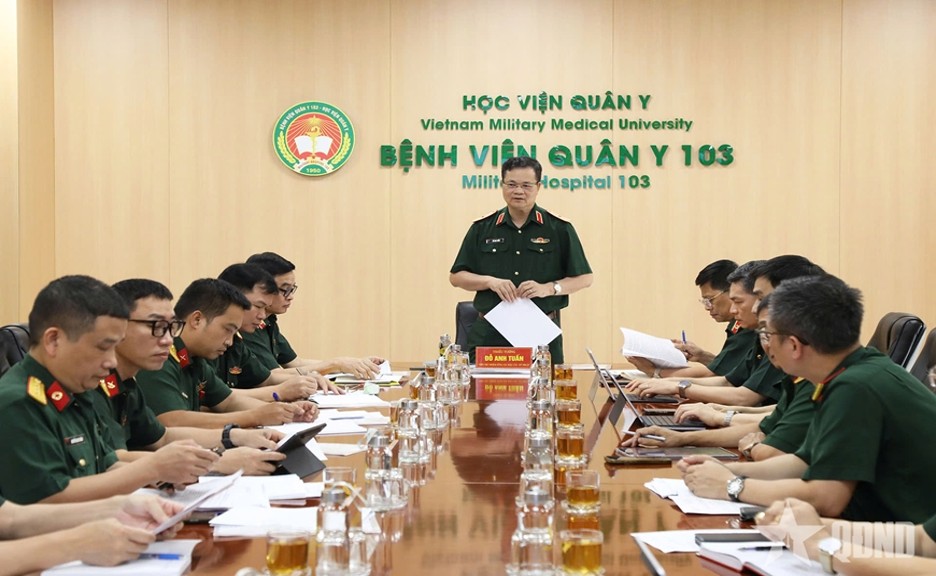
Major General Do Anh Tuan, Deputy Director of the General Department of Logistics and Technical Services, chaired the working session.
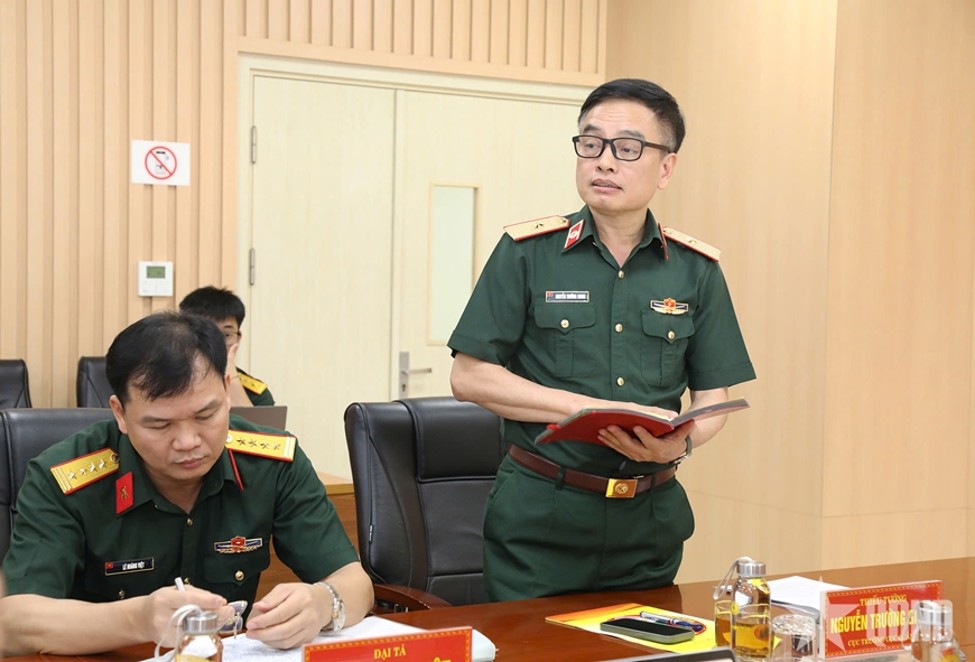
Major General Nguyen Truong Giang, Director of the Military Medical Department, delivered remarks at the working session.
The hospital has successfully deployed and maintained a stable information technology infrastructure to support the EMR system. It has also worked closely with software providers to upgrade EMR modules in accordance with regulations issued by the Ministry of Health and the Military Medical Department. In addition, electronic forms have been optimized for use across digital platforms and mobile devices.
To facilitate the transition, the hospital has organized comprehensive training programs for commanding officers, head nurses, chief administrative officers, senior technicians, and IT personnel.
As a result, the hospital has fully implemented a paperless electronic medical record system for all inpatients. Every component of the medical record – including patient signatures – is now completed digitally using electronic signatures integrated with biometric authentication. All discharge approval procedures and discharge certificates are processed entirely online.
To date, 90% of patients visiting the outpatient department register independently through self-service kiosks, with the registration process taking only 15 seconds on average. This has reduced registration and reception staffing requirements by approximately 50%.
In addition, 100% of inpatients are now treated using paperless electronic medical records, while all patients receive their medical test results electronically. Cashless payments account for 87% of all hospital transactions, reducing cashier staffing needs by more than 30%. The outpatient satisfaction rate has reached 97%.
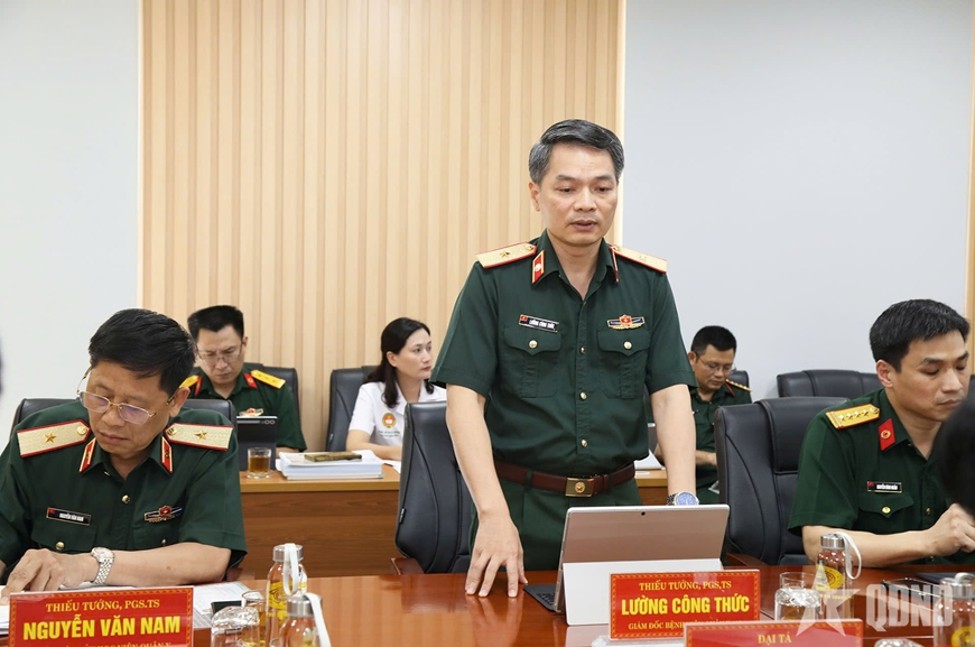
Major General Luong Cong Thuc, Director of Military Hospital 103, delivered remarks.

At Military Hospital 103, 90% of patients attending the Outpatient Department complete their registration through self-service kiosks, requiring only 15 seconds to successfully register.
Looking ahead, Military Hospital 103 will continue refining its regulations and clinical workflows to ensure that the electronic medical record system fully complies with legal requirements while further reducing processing time. The hospital also plans to accelerate digital transformation initiatives and complete its digital healthcare ecosystem, gradually realizing its goal of becoming a fully paperless hospital. Furthermore, the hospital will collaborate with other military hospitals to establish a shared medical database and work toward developing a centralized Big Data platform for the military healthcare sector.
At the same time, the hospital plans to expand the application of artificial intelligence to support diagnostic imaging, pathology, clinical error detection, and clinical decision-making. Big data analytics will also be leveraged to enhance medical research, healthcare management, and quality improvement. Additional priorities include expanding telemedicine services, providing remote professional guidance to lower-level military medical facilities, upgrading information technology infrastructure, and strengthening cybersecurity and information security.
Written by Ngoc Han
Translated by Minh Phuong