Expressing gratitude to those who donate their bodies to medical science.

“There is a highly noble sacrifice, surpassing all barriers, and that is the silent dedication of those who have donated their bodies to the cause of medical education and research, contributing to the healing and bringing life to countless patients,” affirmed Lieutenant General, Assoc. Prof., Dr. Nguyen Xuan Kien, Director of Vietnam Military Medical University, during the ceremony honoring those who have selflessly contributed their bodies to medical science at the Vietnam Military Medical University.
The quiet, profound sacrifice.
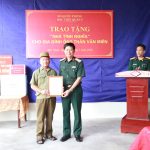
The ceremony to express gratitude to those who donated their bodies to medical science at Vietnam Military Medical University on that day took place in a solemn and respectful atmosphere, yet it was also deeply emotional due to the presence of relatives from various regions. Amid the drifting incense smoke and the shimmering white and yellow chrysanthemums, reminiscent of the embodiment of those noble individuals who selflessly donated their bodies to heal and bring life to the sick… Almost 10 years have passed, but every time Mr. Pham Khac Khoan, from Chua Hang Ward (Thai Nguyen City, Thai Nguyen Province), returns to Vietnam Military Medical University, he still cherishes the memory of the day his father, Mr. Pham Ngoc Boi, donated his body for medical purposes. Mr. Pham Khac Khoan recalls, “Twenty years ago, my father confided that after his passing, he wanted to donate his body to help the blind and contribute to scientific research. Fulfilling my father’s wish, on October 12, 2013, my father returned to our ancestors. Experts, doctors, and medical staff from the Eye Bank (Central Eye Hospital), the Anatomy Department of Vietnam Military Medical University organized the reception of the body at Vietnam Military Medical University and conducted a dignified farewell ceremony.” For almost 10 years, Mr. Pham Ngoc Boi’s body has been preserved at Vietnam Military Medical University for research and teaching purposes; his corneas have brought light to two patients. On April 29, 2023, following the family’s wishes, Mr. Boi’s remains were brought back to his peaceful hometown for eternal rest at the gravesite…
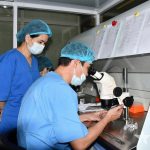
In our conversation, Lieutenant Colonel Dang Tien Truong, Deputy Head of the Anatomy Department at Vietnam Military Medical University, shared: “To become a doctor, medical students must have a thorough understanding of the structure and position of each organ and body part. A significant and indispensable part of this understanding is gained through studying on the bodies of those who have donated. Since its establishment, Vietnam Military Medical University has received hundreds of bodies and body parts for study. In recent years, the promotion and acceptance of donated bodies by the University have become routine and are increasingly emphasized. To date, the university has also received applications and issued hundreds of registration cards for body donation after death to serve this noble purpose. The acceptance of donated bodies, processing, and preservation are carried out by the university with strict procedures, specialized equipment, and the application of modern preservation methods.
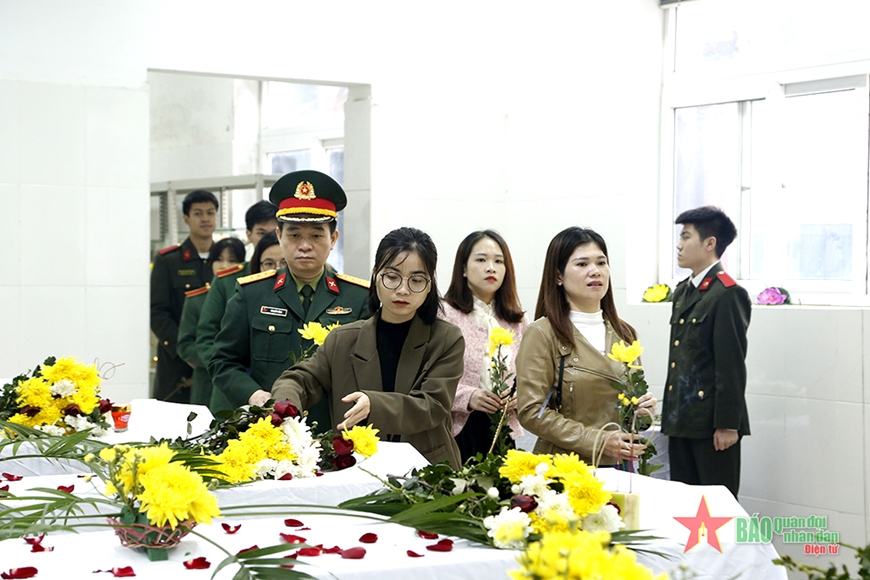
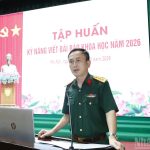
Lieutenant General, Assoc. Prof., Dr. Nguyen Xuan Kien emphasized: “To express gratitude to those who have donated their bodies to medical science, from 2015 to the present, Vietnam Military Medical University organizes an annual solemn gratitude ceremony. This event holds significant importance, aiming to continue educating generations of officers, doctors, healthcare staff, and students of the university about the appreciation for those who have donated their bodies to medical science.”
More dedication and sharing are needed.
The act of donating organs and bodies for medical education has been taking place for a long time worldwide, recognized by all social strata for its humane, compassionate, and profound scientific nature. According to experts, bodies for medical training are still considered irreplaceable. Despite the modern development of anatomical research models, they still cannot completely replace the direct study on human bodies.
As someone with many years of experience in the medical field, Colonel Le Thi Thuy Hang, Head of the Department of Pediatrics at Military Hospital 103, understands the importance of these specimens and human bodies, so she has registered to donate her body for medical purposes. Colonel Le Thi Thuy Hang shared her thoughts: ‘We may not be able to change the world, but we can change ourselves, breaking down old prejudices. If we expand our goodwill and offer our bodies for research, the field of medicine will continuously develop, and many lives will be extended…’

The demand for organ and body donation is always essential in today’s medical field. However, in reality, the promotion, acceptance, and use of donated bodies still face many difficulties and obstacles due to spiritual and religious factors. Lieutenant Colonel Dang Tien Truong shared that to promote and make the acceptance, retrieval, preservation, and use of organs, tissues, and bodies more effective, the Anatomy Department specifically, and Vietnam Military Medical University in general, are committed to enhancing awareness and education about the position, significance, and importance of bodies for training and medical research. This includes educating about organ and body donation and fostering gratitude towards body donors. Research on new preservation methods and processes is conducted to meet the increasing demands of medical research and education, in line with the spirit of the Law on Organ and Body Donation, Grafting of Human Organs, Tissues, Body Parts, and Body Donation; and guidance from the Ministry of Health on the requirements for accepting donated bodies.
Photo & News: Pham Kien, Translation: Nguyen Thi Mai Huong