Journey of 60 Years: From a Department with Three Doctors to the Nation’s Largest Burn Institute.

Originally just a department within Military Hospital 103 with only three doctors and nine nurses, the Le Huu Trac National Institute of Burns has evolved into the largest specialized burn treatment facility in Vietnam, revitalizing thousands of burn victims.
On December 1, 1964, during the intense phase of the resistance war against American imperialism, the Department of Burns was established at Military Hospital 103. This was initiated on the basis of the Department of Field Surgery to meet the urgent need for treating and rehabilitating wounded soldiers. The department was tasked with treatment, training, and research, focusing particularly on burns sustained in warfare.
Sixty years later, the once modest Department of Burns has grown into the largest burn treatment facility in the country, providing life-saving care to tens of thousands of patients. A notable example is the case of two patients, N.V.H. and N.V.D., from Nam Dinh province, who were rushed to the Le Huu Trac National Institute of Burns with severe gas burns. D. suffered burns covering 76% of his body, including 40% deep burns and severe respiratory burns. Upon admission, his chances of survival seemed slim. However, the doctors swiftly initiated intensive resuscitation efforts, successfully saving his life.
Afterward, they continued to prepare instruments for the debridement surgery, removing necrotic tissue early and covering the damaged skin area with autografts, allografts, and other materials. Wherever there was healthy skin left on the body, doctors would harvest it for grafting. In this way, the young man underwent about 10 skin graft surgeries.
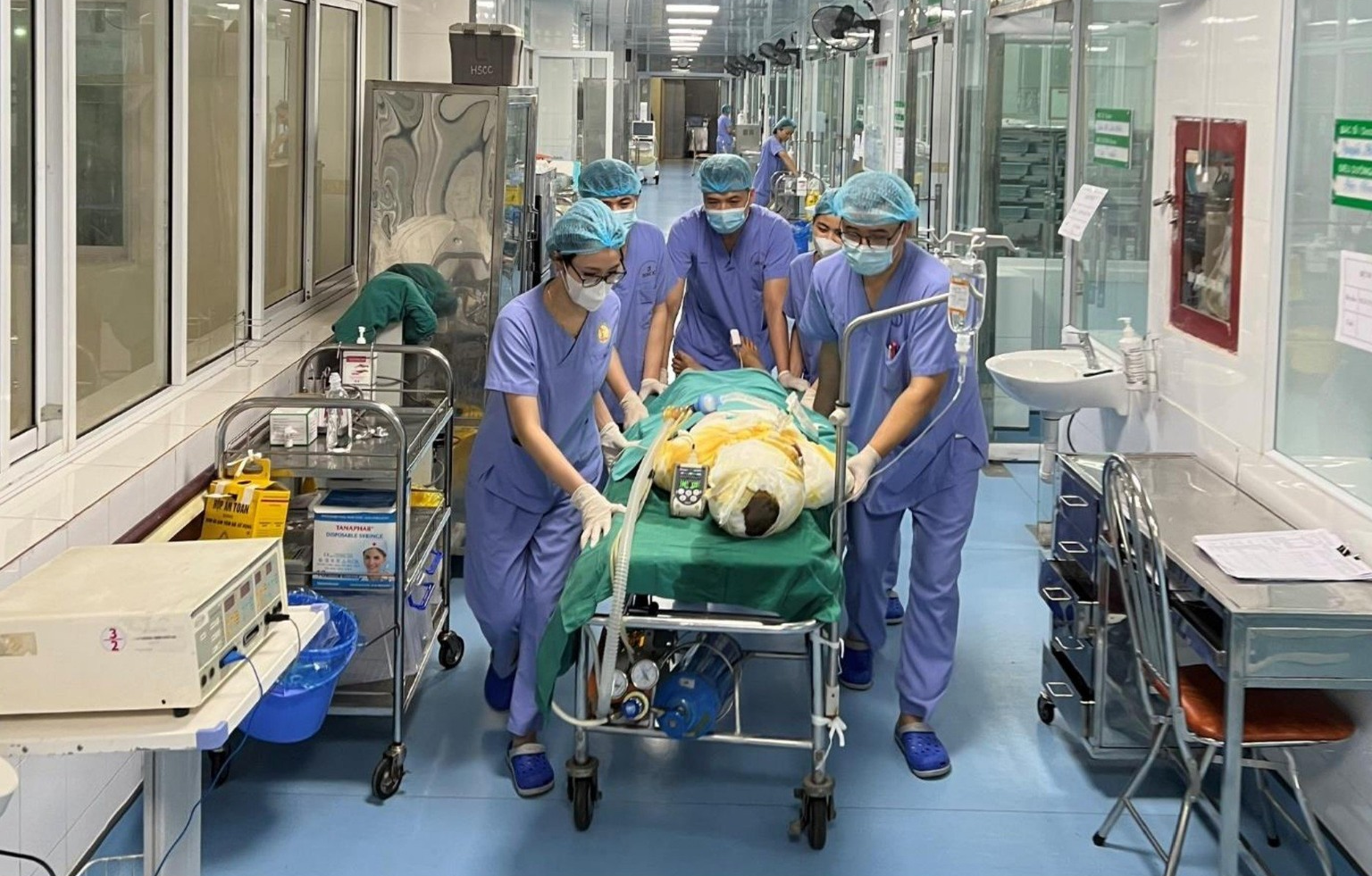
Burn patients often require long-term treatment ranging from two to three months, or even up to a year. Complications such as progressive acute respiratory distress syndrome, kidney failure, septicemia, septic shock, multiple organ failure, and gastrointestinal bleeding require constant, meticulous monitoring by doctors to manage and promptly address any unforeseen issues that may arise.
From a small Department to a premier Specialty Hospital
At its inception, the department had a staff of 18 including three doctors, two medical assistants, nine nurses, and four administrative personnel, led by late Prof., Ph.D. Le The Trung.
Prof. Trung authored two significant works, “Essentials about Burns” and “Burns in War,” and also developed a film for military units on prevention, first aid, and treatment of burns caused by incendiary weapons.
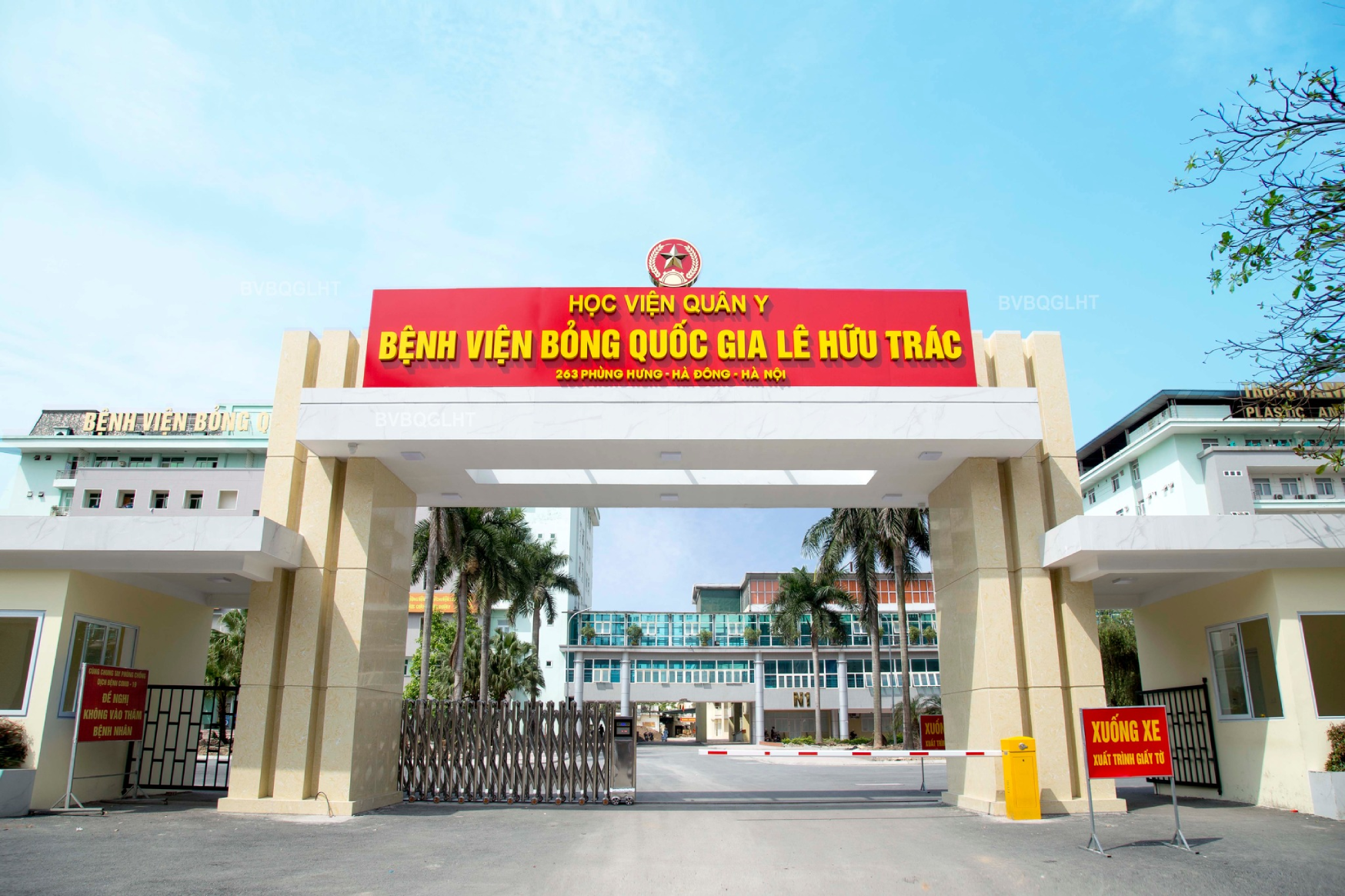
From a small Department to the largest burn hospital in the country
Upon the restoration of peace, in response to the critical need for a leading specialist unit to direct and develop the specialty, the National Institute of Burns was established on April 25, 1991 based on the Department of Burns, Military Hospital 103, which is now the precursor to the current Le Huu Trac National Institute of Burns, with the responsibility of being the leading hospital for burns in the country.
| Level of staff expertise | Quantity |
| Professor | 4 |
| Associate Professor | 10 |
| Doctorate | 25 |
| Master | 37 |
| Specialist Doctor Lv. II | 11 |
| People’s Doctor | 3 |
| Meritorious Doctor | 9 |
The unit now boasts modern and comprehensive infrastructure, gradually meeting the criteria for a top-tier specialized hospital; it serves as an exemplary teaching hospital for the Vietnam Military Medical University. Many doctors are members of global associations like the International Society for Burns Injuries, the Wound Healing Society, and the Regional and International societies for plastic surgery. The hospital is also a member of the ASEAN disaster medicine training network.
As a teaching hospital for the Vietnam Military Medical University, the Faculty of Burns and Disaster Medicine along with the Faculty of Plastic and Reconstructive Surgery has been integral in training both undergraduate and postgraduate students. To date, the facility has trained 45 PhDs, nearly 200 master’s students, specialists, and residents. The hospital places a strong emphasis on in-house training, refresher courses, and foreign language education for its staff to keep abreast of the latest medical knowledge and continuously improve their professional skills.
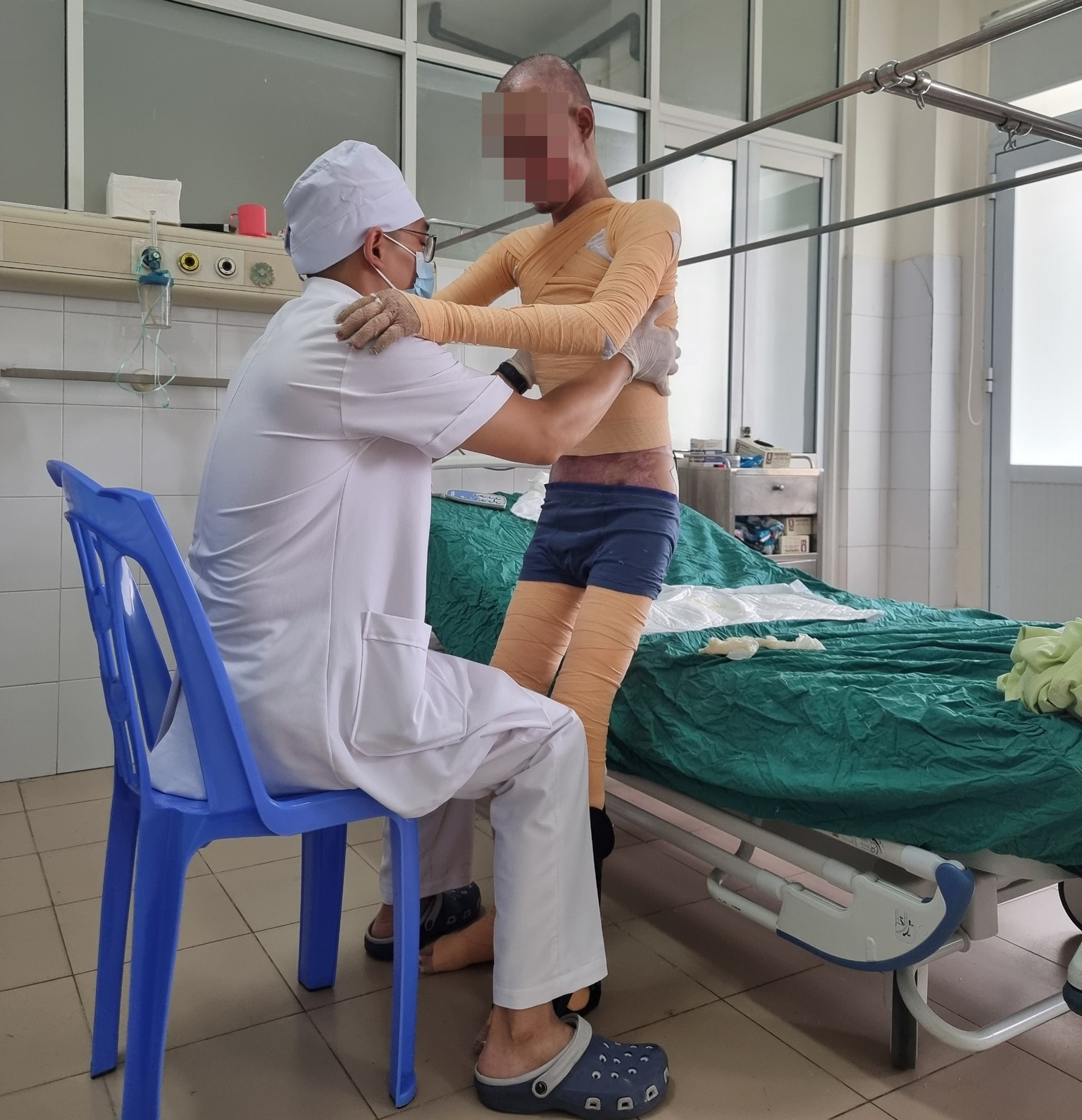
Doctors perform rehabilitation to help patients reintegrate into the community
Typical emergency responses involved lifesaving efforts in multiple mass burn incidents such as the Dai Bai fireworks explosion in Bac Ninh (2003); the Z121 factory explosion in Phu Tho (2013); the MI-171 helicopter crash (2014); a military helicopter crash in Laos (2015), and a maritime explosion in Quang Ninh (February 2023). In many disasters, doctors successfully saved nearly 100% of the victims.
From herbal remedies to world-class burn treatment methods
When the Department of Burns was first established during the intense war period, the facility faced numerous challenges with poor infrastructure and limited resources. The physicians there innovatively used a variety of natural herbs and medicinal plants available in Vietnam. This approach provided critical treatment for many soldiers and civilians suffering from burns caused by napalm, white phosphorus, thermite, and other incendiary weapons.
Over the years, the quality of burn treatment has continuously improved, achieving advances in comprehensive patient care, which enhances survival rates and life quality, helping patients reintegrate into the community more effectively. Various modern techniques have been implemented in burn care, reconstructive surgery, wound healing, and rehabilitation.
The hospital has successfully integrated modern medicine with traditional medicine. Several traditional medicine products such as Berberin, Maduxin, B76, Selaphin, and Dampomate have been researched, modernized, and widely applied in treatments, contributing to enhanced quality and reduced treatment costs.
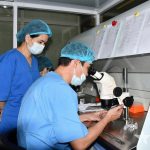
The hospital focuses on developing tissue preservation technologies and cell culture techniques. Notably, it produces and preserves temporary skin substitutes like pig dermis and frog skin; it also manufactures cultured products such as allogeneic fibroblast sheets, autologous keratinocyte sheets, and autologous keratinocyte suspensions. Products derived from umbilical cord membranes, adipose tissue, and platelet-rich plasma are also developed. The hospital’s Centre of Wound Healing has successfully applied numerous advanced techniques in tissue and cell technology.
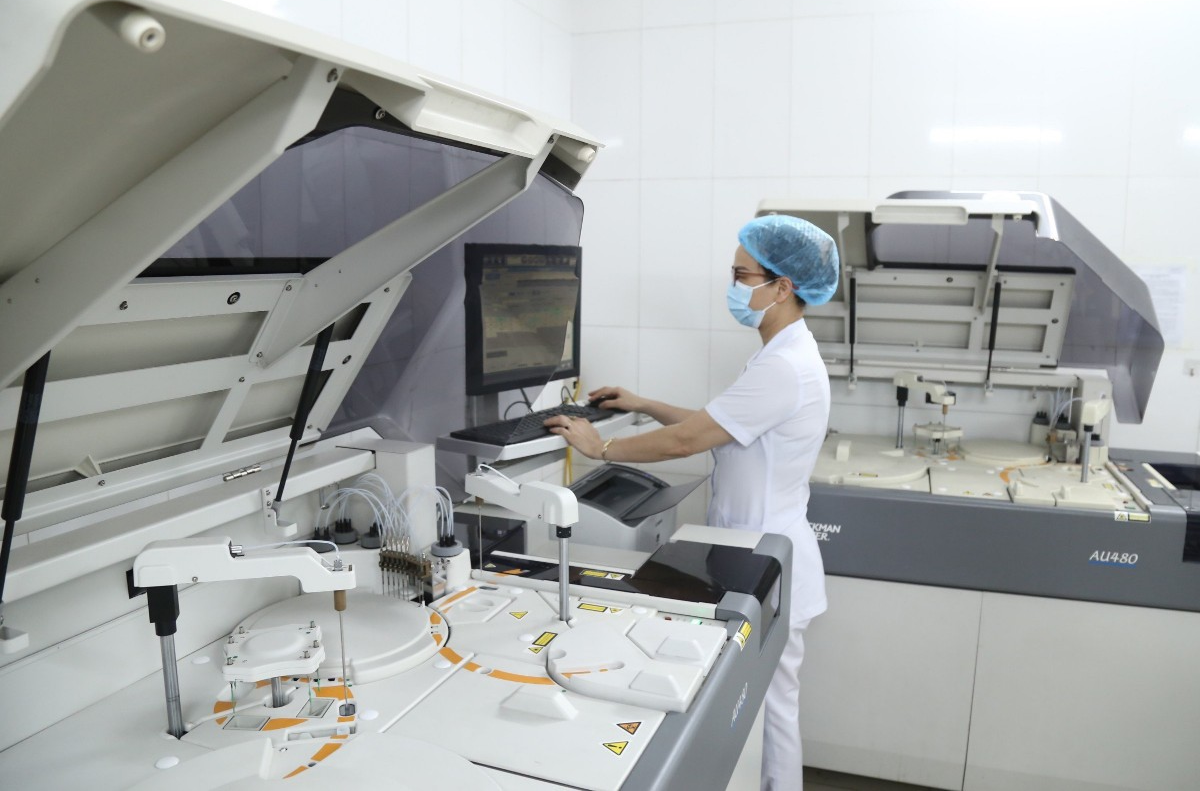
Hospital technicians master numerous modern equipment
The Centre for Cosmetic and Reconstructive Surgery has significantly advanced, applying and developing modern and advanced techniques in the prevention and treatment of contracture scars from burns, congenital malformations, and sequelae of other diseases. Notable techniques include microsurgery, supermicrosurgery, superficial radiotherapy, and laser treatments.
Major General, Professor, Ph.D. Nguyen Nhu Lam, Director of Le Huu Trac National Institute of Burns, reports that each year the hospital admits and treats between 7,000 to 9,000 burn patients and burn sequelae, manages acute and chronic wound recovery, and functions rehabilitation. Recently, there has been an increasing trend in patient visits, including many international patients from countries like China and Russia. Most patients treated at the hospital suffer from moderate to severe burns with many having complex complications, including respiratory and gastrointestinal burns and mass casualties from fire and explosion disasters.
Written by PHUONG THUY, Photos by LHT NIB, Translated by Vu Dat