MILITARY INSTITUTE OF CLINICAL EMBRYOLOGY AND HISTOLOGY: KEEPING THE FLAME OF HOPE ALIVE

Some calls come long after dark. On the other end, a voice breaks apart—a husband or wife who has spent years chasing the possibility of a child, and who tonight, at wit’s end, reaches for the one person who never seems to stop picking up. That person is Meritorious Physician, Colonel, Assoc. Prof. PhD. Trinh The Son, Director of the Military Institute of Clinical Embryology and Histology at the Vietnam Military Medical University (VMMU).
Those who know him well speak of a doctor with what they can only describe as a “gifted touch” when it comes to assisted reproduction. As head of the Military Institute of Clinical Embryology and Histology at VMMU, Dr. Son has spent decades working at the intersection of science and heartbreak, quietly reshaping what parenthood looks like for families who had nearly stopped believing it was possible.
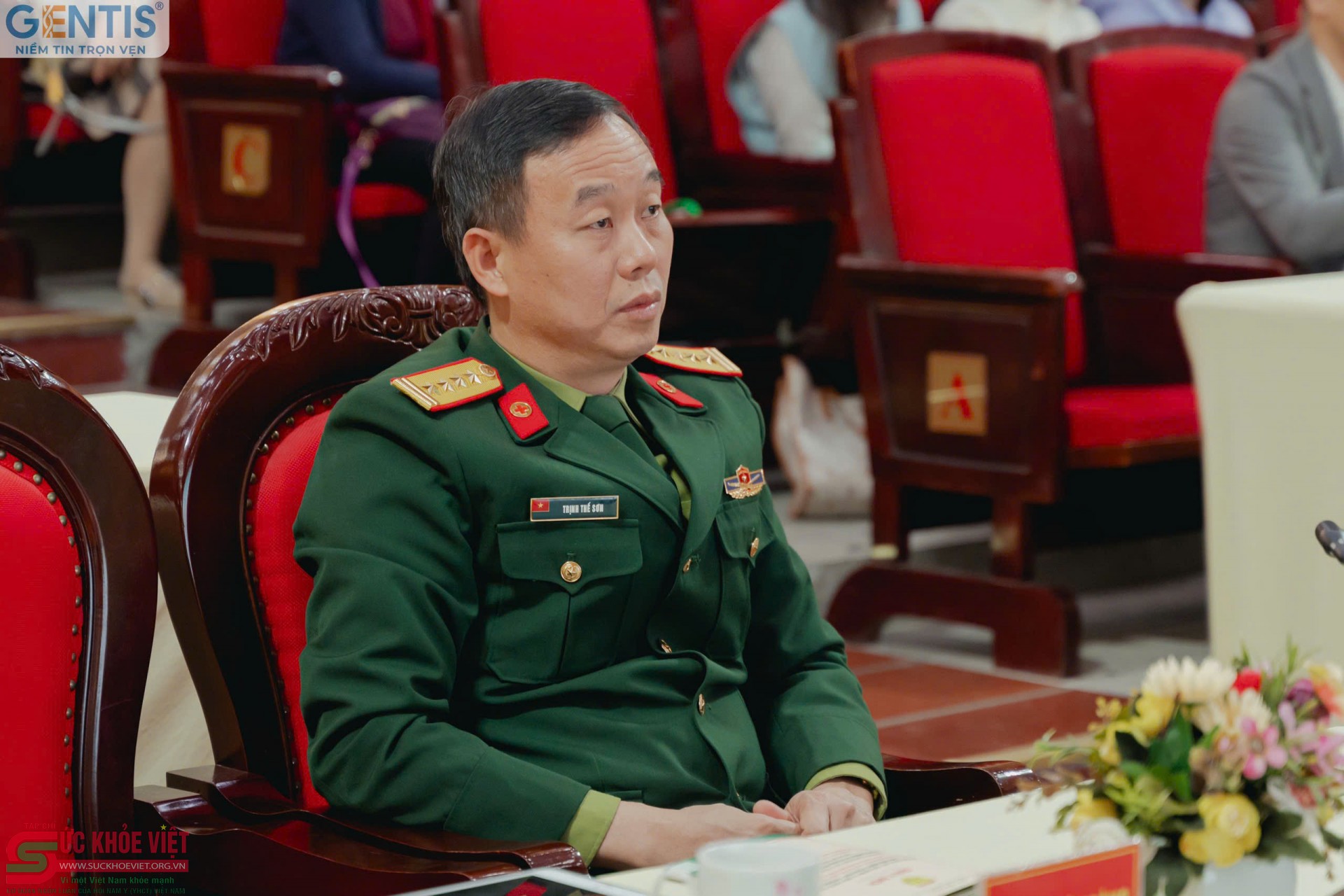
Distinguished Physician, Colonel, Assoc. Prof., PhD. Trinh The Son, Director of the Military Institute of Clinical Embryology and Histology and Histology – Vietnam Military Medical University.
The Doctor Who Stays Awake with His Patients
It could be midnight. It could be closer to two in the morning. But when the phone lights up on Dr. Trinh The Son’s nightstand, he answers. The voice waiting for him is rarely calm—often it belongs to a woman who conceived after years of failed attempts, now frightened by something she can’t explain: “Doctor… I’m bleeding… I’m so scared…”
In assisted reproduction, fear can be its own kind of emergency. For women who have already lived through rounds of treatment and disappointment, even a minor irregularity can feel catastrophic. What is at stake is never just a pregnancy—it is the sum of everything they have endured to get there: the injections, the waiting rooms, the grief of repeated loss.
Dr. Son sits up. His voice, tempered by more than thirty years in medicine and countless late shifts in the embryology lab, stays level. He works through the questions methodically—how much bleeding, which medications, when it started. “Try not to move around too much. Are you taking your medication exactly as I prescribed?” And then, almost always, the same steady close: “I’m here. Don’t let yourself spiral. Get some rest, and come in first thing tomorrow.”
For anyone else, it might just be a phone call. For a woman who has spent years trying to become a mother, it is the difference between making it through the night and falling apart.

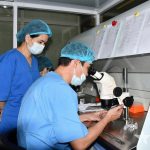
Meritorious Physician, Colonel, Assoc. Prof., PhD. Trinh The Son, along with his team of doctors, performed the egg retrieval procedure for in-vitro fertilization (IVF).
Over two decades, these calls have quietly woven themselves into the fabric of Dr. Son’s life—whether the news is a concerning symptom or the crushing disappointment of a negative test. He picks up because he knows his patients are carrying something heavier than a diagnosis: the weight of social pressure, of time running out, of hope that keeps getting deferred.
A Companion Through the Darkest Days
I know what it feels like to be one of those patients. I was 40 years old when I walked through the doors of the Military Institute of Clinical Embryology and Histology, carrying a folder of old test results and a wariness that years of failed treatments had made almost second nature. What struck me first about Assoc. Prof. PhD. Trinh The Son was not his rank or the titles on his door. It was his unhurried manner, the way he made you feel like your case actually mattered to him.
He went through my records carefully, explaining things that other doctors had glossed over, never once looking at the clock. At some point I started crying—not dramatically, just the kind of quiet tears that come when you’ve held too much in for too long. He didn’t rush past it. He looked at me and said: “While there’s still a chance, we keep going.”
The months that followed were hard in the way that treatment always is—the bruised skin from injections, the sleeplessness, the dread of another disappointment. But there was something different about going through it there. Every member of staff, from the doctors down to the nurses, seemed genuinely invested. Walking into the institute never felt clinical. It felt, oddly, like being looked after.
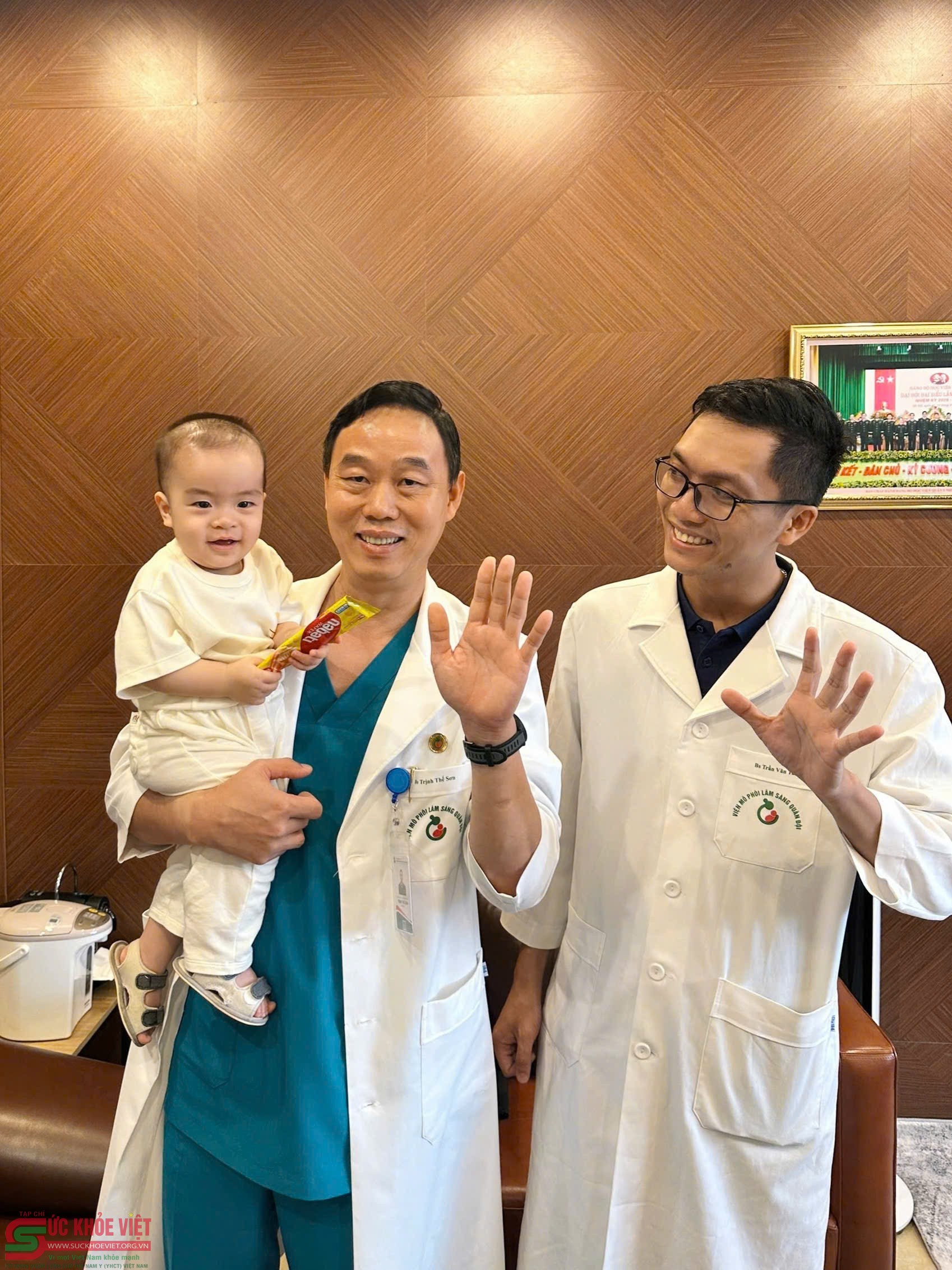
Meritorious Physician, Colonel, Assoc. Prof., PhD. Trinh The Son holds a healthy baby born thanks to in-vitro fertilization (IVF).
Then came the news I had stopped letting myself picture: I was pregnant. Hearing a heartbeat for the first time after everything we had been through was not something I had words for then, and I’m not sure I do now. Nine months later, I was holding a healthy baby boy. And somewhere behind all of it was a doctor in a green uniform who had simply refused to let me give up.
Over Twenty Years of Keeping the Flame Alive
Dr. Trinh The Son’s career began at the Military Medical University in 1994. From there, he pursued further training abroad—first in Japan, at Kyorin and Tokyo University, then in Germany, where he trained under Prof. Stefan Schlatt and acquired expertise in Micro TESE, a microsurgical procedure used to retrieve sperm in men with severe infertility. For patients who have been told there is simply no viable sperm to work with, the technique represents a genuine last resort—and for many, it has been the one that worked.
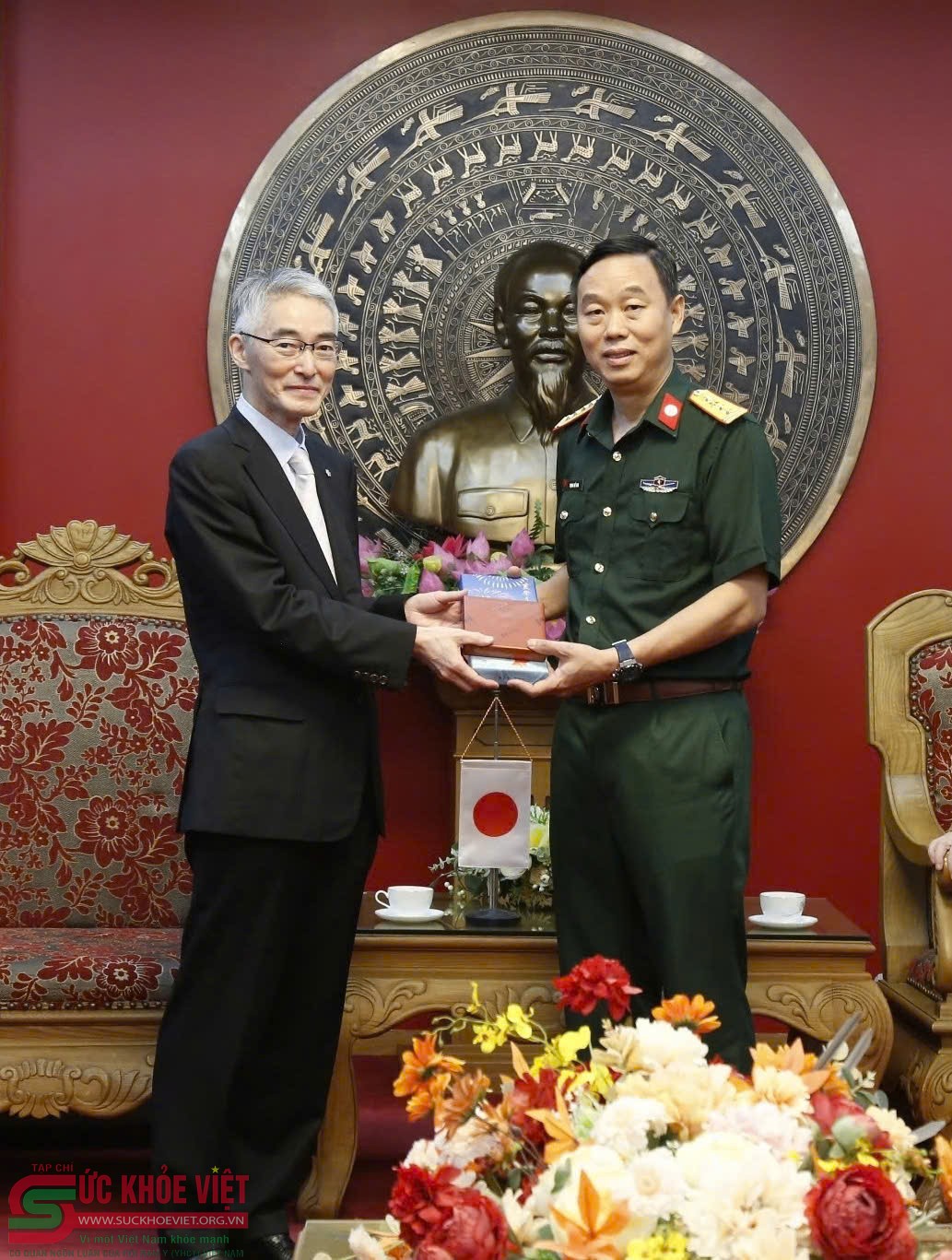
Meritorious Physician, Colonel, Assoc. Prof., PhD. Trinh The Son – Director of the Military Institute of Clinical Embryology and Histology and Histology – welcomed and presented commemorative gifts to representatives of the Japanese partners.
One case that stays with those who know it involved Mrs. H., the wife of a military officer, who had spent two decades in a marriage without children. She and her husband had tried elsewhere, repeatedly, without success. At the Institute, a combination of Micro TESE and a treatment plan built around their specific situation finally resulted in a pregnancy. Looking back on it, she said simply: “If Dr. Son hadn’t kept pushing us to believe it was possible, we would have stopped trying a long time ago.”
The numbers behind Dr. Son’s career are notable: more than 130 published scientific papers and, in 2014, a patent for a method of isolating spermatogenic stem cells. But the measure of his work that seems to matter most to him hangs on the walls of his office—photographs sent by parents of the children born through the Institute, from infants to school-age kids posing in their first uniforms.
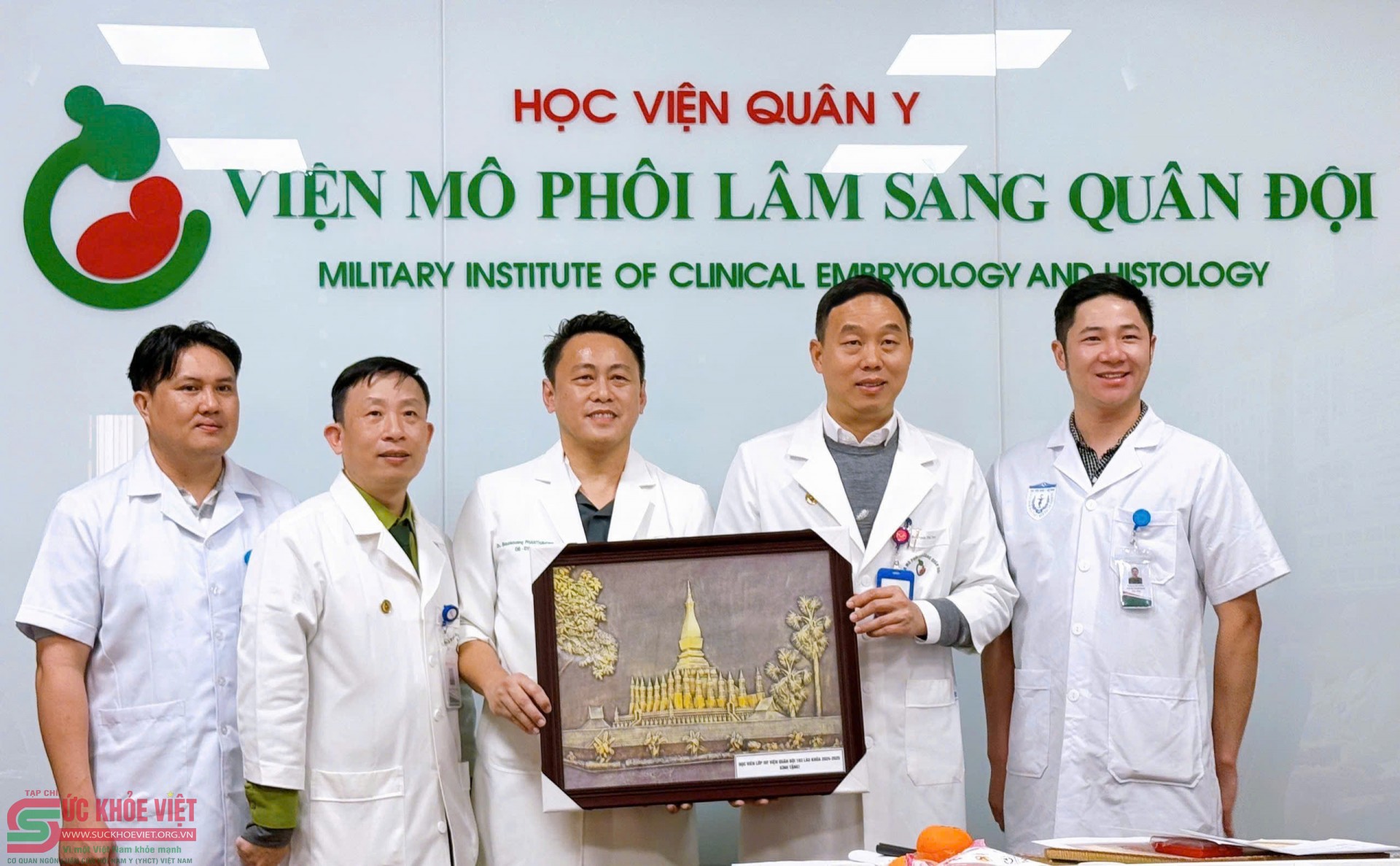
Meritorious Physician, Colonel, Assoc. Prof., PhD. Trinh The Son – Director of the Military Clinical Embryology Institute, along with experts and doctors from the Institute, took a commemorative photo after the conclusion of the training course on assisted reproductive techniques for staff of the Central Military Hospital 103 of Laos
Day after day, couples make their way to the Institute from every corner of the country—from Nghe An, from the south, from wherever they have heard that someone here is still willing to try. They come with dog-eared files and the careful optimism of people who have been disappointed before. And day after day, the doctor they call the “soldier-doctor” meets them with the same composure, the same patience, the same refusal to write anyone off.
Ask any fertility specialist what the job is really about, and the honest ones will tell you it has very little to do with awards. It is the sound of a newborn breathing for the first time in a delivery room—a sound made possible by years of work, sleepless nights, and a stubborn insistence on keeping hope from going out.
News: Duc Tu
Translation: Minh Khoa