The doctor spent nearly 20 years struggling to save the lives of life-threatening burn patients

Working at the National Burn Hospital from 2006 until now, Dr. Hung has saved thousands of patients with life-threatening burns.
In early 2024, two brothers Nguyen Duong and Nguyen Huy (from Nam Dinh) were transferred to the National Burn Hospital while wrapped in blankets. Both suffered burns from the gas fire, Huy suffered less severely, while Duong gasped, his whole body turned black, he had respiratory failure, his blood pressure dropped, and the oxygen level in his blood could not be measured.
Duong was diagnosed with burns on 76% of his body, of which 40% were deep burns and severe respiratory burns. “No one thought he could live because his burns were so severe,” said Colonel, Doctor, Tran Dinh Hung, Head of the Department of Emergency Resuscitation, National Burn Hospital.
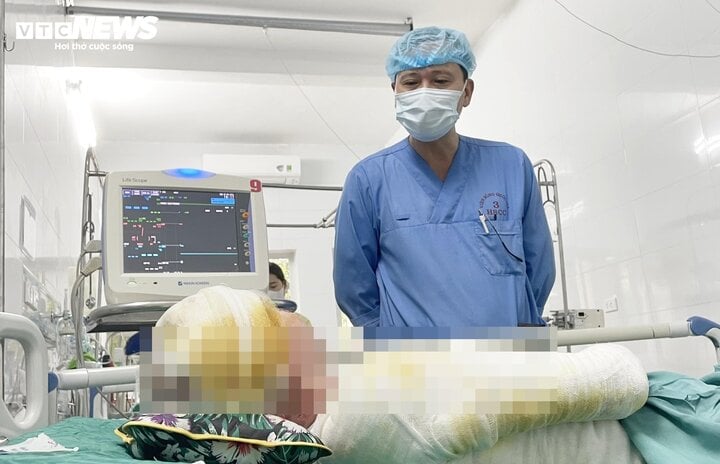
Colonel, Doctor, Tran Dinh Hung paid a visit to patients being treated at the Emergency Resuscitation Department.
Immediately upon receiving the severe burn case, Dr. Hung and his colleagues actively resuscitated the patient for shock. Once the patient is out of danger, the team continues to prepare tools for excision surgery, remove early necrotic skin, then cover the damaged skin with autologous skin, allogeneic skin and other materials.
When the wound is stable, the doctor will graft the patient’s autologous skin. “Wherever there is skin on the patient’s body, we will take it for grafting. In case of patient Duong, it is expected that he will have skin graft surgery about 10 times,” said Dr. Hung.
Normally, severe burns require about 2-3 months of treatment, which is very long-term, always facing many complications, and possibly death. Doctors always have to strain their brains, closely monitor patients, and promptly handle any unexpected problems. Common complications in burn patients are progressive acute respiratory distress syndrome, kidney failure, sepsis, septic shock, multiple organ failure, and gastrointestinal bleeding.
Working at the National Burn Hospital from 2006 until now, Dr. Hung has saved thousands of patients with life-threatening burns.
According to Dr. Hung, many people think that only injuries related to the brain, chest, abdomen, and spine can easily die, and few people die from skin burns. However, the death rate from severe burns is very high, up to 60%, especially in patients with extensive deep burns and respiratory burns.
Treating patients with extensive deep burns is very difficult, expensive, takes a long time, and causes great pain for the patient. Doctors must closely follow patients from the time they enter the hospital until they go home. This is completely different from surgical trauma cases, where they can be discharged from the hospital in just one week. Burn patients discharged from the hospital still have to treat their sequelae, doctors continue to guide and accompany them.
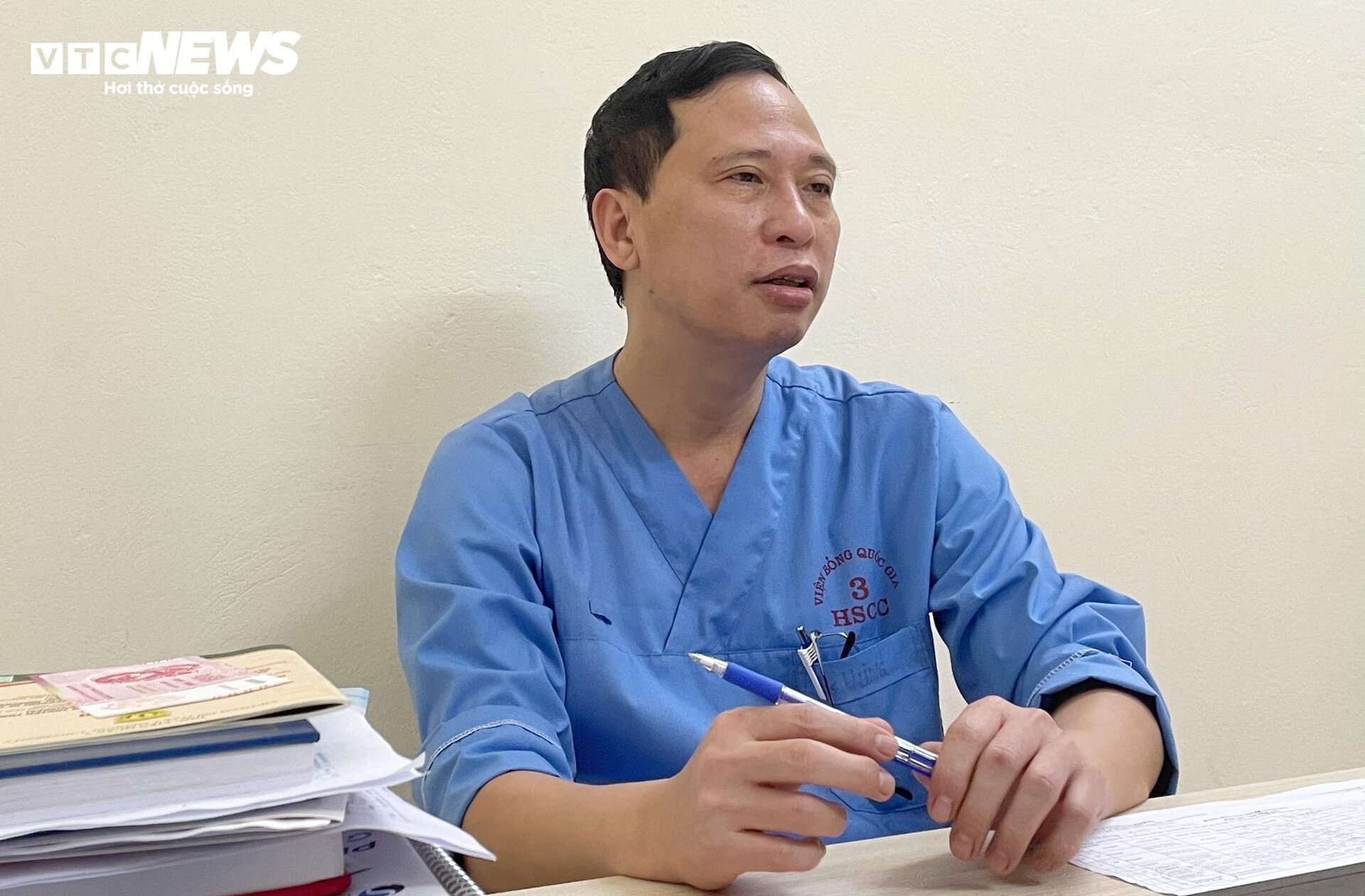
Normally, resuscitation doctors are only responsible for resuscitating patients, but at National Burn Hospital, Dr. Hung and his colleagues also work as surgeons. The team does everything from emergency and resuscitation to surgery and post-operative care.
“The doctors in the department are very busy, the nurses on duty cannot sit at all, and I spend most of the day in the operating room,” said Dr. Hung.
Currently, burn treatment in Vietnam has developed on par with other countries in the region. Many advanced burn treatment methods such as early necrosis and skin grafting, autologous skin grafting combined with allografts in one surgery; artificial ventilation to protect the lungs and aerosols to treat respiratory burns, autologous skin cell culture to treat people with extensive deep burns helps a high rate of patient recovery.
What Dr. Hung is concerned about is how to train the next generation of doctors to treat burns well, when the trend is for medical students to pursue other majors such as cosmetology.
At the age of over 50, Dr. Hung still works in parallel between medical examination and treatment, saving lives and training the next generation to continue and develop the emergency resuscitation techniques he is working on. Looking at his students who are increasingly maturing and perfecting their skills, Dr. Hung is always proud and feels that the path he is taking is the right one.
Dr. Hung always teaches his students to pass on their profession and to have obligations and responsibilities to their patients. In fact, Dr. Hung’s students have now performed many difficult surgeries, helping to revive many lives.
News and photos: Nhu Loan, translator: Thu Hien