THE MOMENT OF SAVING THE LIVES OF SOLDIERS IN THE MILITARY MEDICAL BUNKERS AT DIEN BIEN PHU CAMPAIGN

Here’s the firsthand account from Major General Nguyen Tu, former Deputy Director of the Vietnam Military Medical University (VMMU), a distinguished alum of the 1946 – 1952 class at Hanoi Medical University, who was subsequently called to duty during the pivotal Dien Bien Phu Campaign in 1954.
At the age of 95, Major General Nguyen Tu is still mesmerized by a vivid recollection of “Dien Bien through 9-year struggle”. Flipping through each photo and neatly arranging war memorabilia, the veteran passionately talked about the doctors in the historic campaign.
UNDERGROUND HOSPITALS
“In the middle of November 1953, the 316th Army moved from its garrison in Cam Thuy district (Thanh Hoa) to the Northwest Region to liberate Lai Chau, which was still occupied by the enemy after the Northwest Campaign. At that time, I was an officer of the Military Medical Department of Group 316”, Mr. Tu said.
However, on the night of November 20th, 1953, there was an emergency telegram reporting that the enemy had discovered the 316th Army advancing to the Northwest Region. Feeling that Lai Chau and Upper Laos were threatened, most of the enemy troops parachuted into Dien Bien.
“The enemy gathered at Dien Bien to build a group of strongholds that they considered “impregnable”. If the Viet Minh could not defeat them, they would control the entire Northwest Region”, Major General Nguyen Tu said.
At that time, the 316th Army was also divided into battalions to operate quickly, no later than December 6th, 1953, they had to be present in Tuan Giao district (Dien Bien).
Mr. Tu commented that during the 9-year resistance war against the French, our army and people conducted dozens of typical campaigns, but Dien Bien Phu was the campaign “with the most achievements”.
Specifically, this is the longest campaign, not only 56 days and nights but many brigades had to be present in Dien Bien months in advance to do preparation work. The campaign also had the most wounded and sick soldiers with nearly 15,000 people.
This is also a campaign in which officers and soldiers operated under the most difficult conditions. Accordingly, after we changed the combat motto from “fight quickly, resolve quickly” to “fight firmly, advance firmly”, all activities of military medicine were in underground bunkers – battalions, regiments, and brigades all had their bunkers.
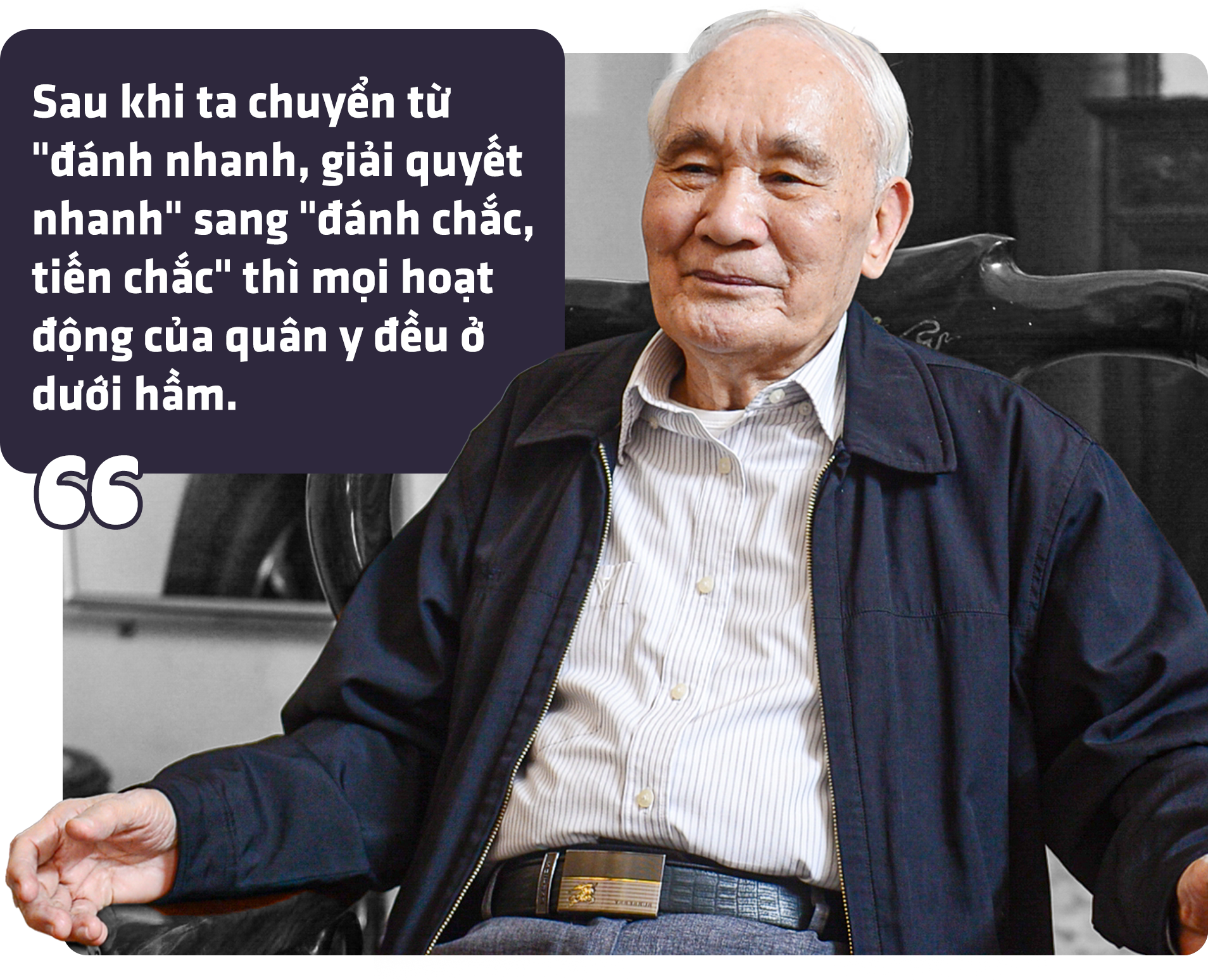
“After we changed the combat motto from “fight quickly, resolve quickly” to “fight firmly, advance firmly”, all activities of military medicine were in underground bunkers…”
Sharing about the process of treating wounded soldiers at the Dien Bien Phu Campaign, Major General Nguyen Tu said that when soldiers were injured, nurses at the company would first stop the bleeding, then bandage, stabilize the wound and after that transfer them to the battalion line.
Each battalion had to have a military medical station, where wounded soldiers were given additional first aid. If the wounded soldier was still bleeding, it was neccessary stop the bleeding with a tourniquet (temporary method of stopping bleeding with a rubber band or fabric band twisted tightly around the limb). If the wound was already tourniqueted in the battalion, it had to be loosened to allow blood to circulate and avoid necrosis…
“Wounded soldiers returning to the battalion line would often be hungry, thirsty and very dirty. The military medical station of each battalion had to have a Hoang Cam stove to cook, feed and bathe the wounded soldiers, and then transfer them to the regiment line. The battalion did not keep wounded soldiers, except for soldiers who were only scratched”, Mr. Tu said.
Next is the regiment line, according to him, each regiment had at least about 50 bunkers, including operating bunkers, bandage changing bunkers, and bunkers for wounded soldiers to rest. The regiment line was similarly arranged but with a larger scale, accommodating about 150 – 200 wounded soldiers.
“The most important thing was to ensure the treatment of wounded soldiers underground. It was no different from an underground hospital. Battalions, regiments, and brigades took turns as hospitals, the more severely injured soldiers were, the more seriously they were transferred to the hospital line above”, Mr. Tu said.
STUDYING AND TREATING WOUNDED SOLDIERS AT THE SAME TIME
Besides the difficulties in the working environment, military medical soldiers in the Dien Bien Phu campaign also faced professional disadvantages because most of them were still just medical students.
“We were not doctors yet, we were all students studying at Hanoi Medical University from the class of 1946 to the class of 1952. All of us volunteered to serve in the army. Being just medical students meant our medical degrees were not qualified enough, just the basic knowledge”, Major General Nguyen Tu admitted.
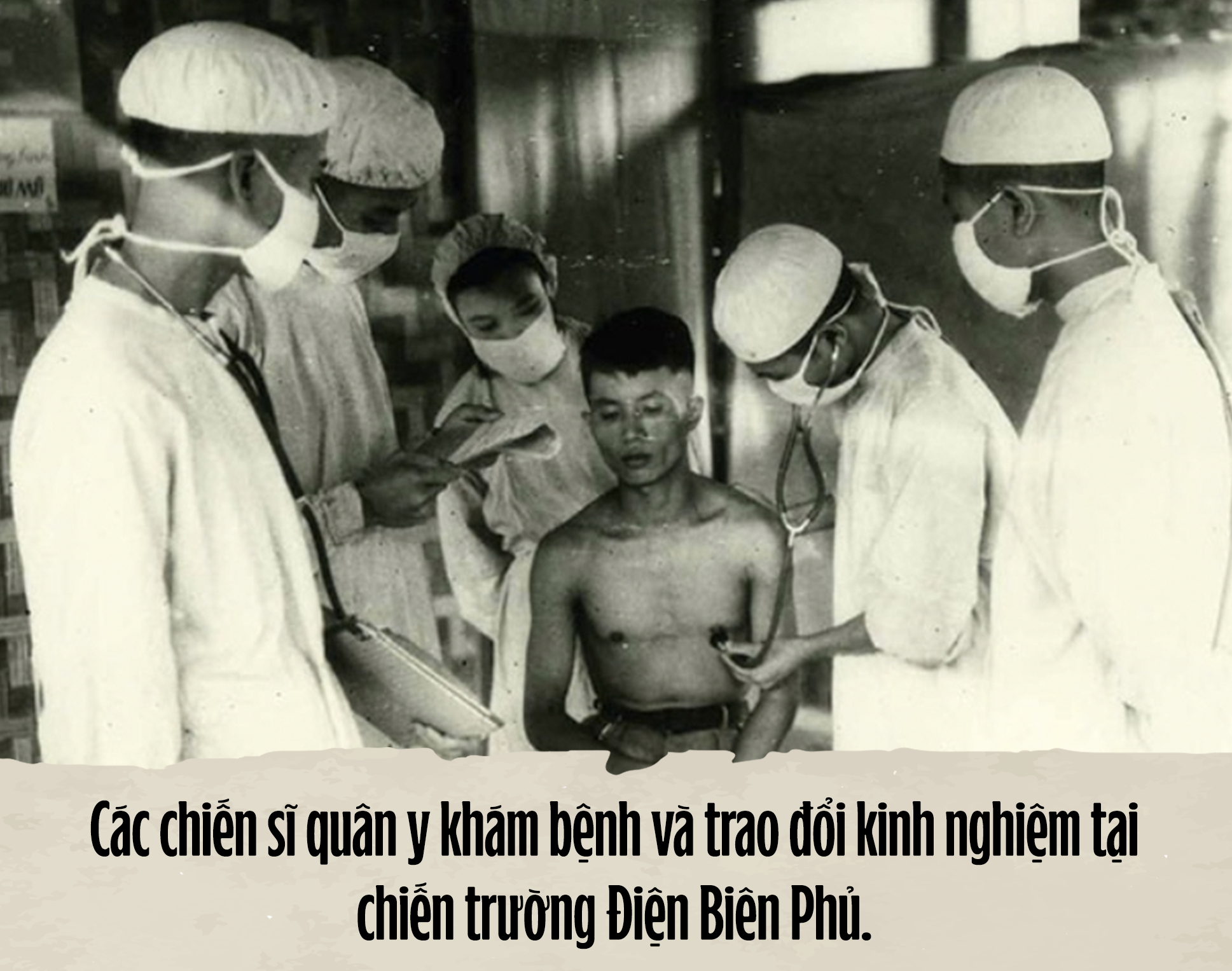
Military medical soldiers examined patients and exchanged experiences at the Dien Bien Phu battlefield
That day, in the backpacks of student Nguyen Tu and his classmates, there were books and notebooks: “At that time, medical books were very rare, at school there were only a few textbooks and practical guides written in French, we had to copy it down and read it while marching”.
But medical knowledge is boundless, not to mention that they could only read books during breaks while on operations, so Mr. Tu and many military medical soldiers often fall into the situation of “learning while practicing” when participating in campaigns, including the campaign in Dien Bien.
“When participating in the battlefield, students were guided by military doctors on the structure of their limbs, but the problems related to blood vessels and the brain were mostly clueless. There are cases where I didn’t know “the way back and forth” of blood vessels, nerves, and parts of the body, I had to turn the book over to read and compare. One guy even stood next to read the book for another guy to perform treatment in the operating room”, General Tu confided.
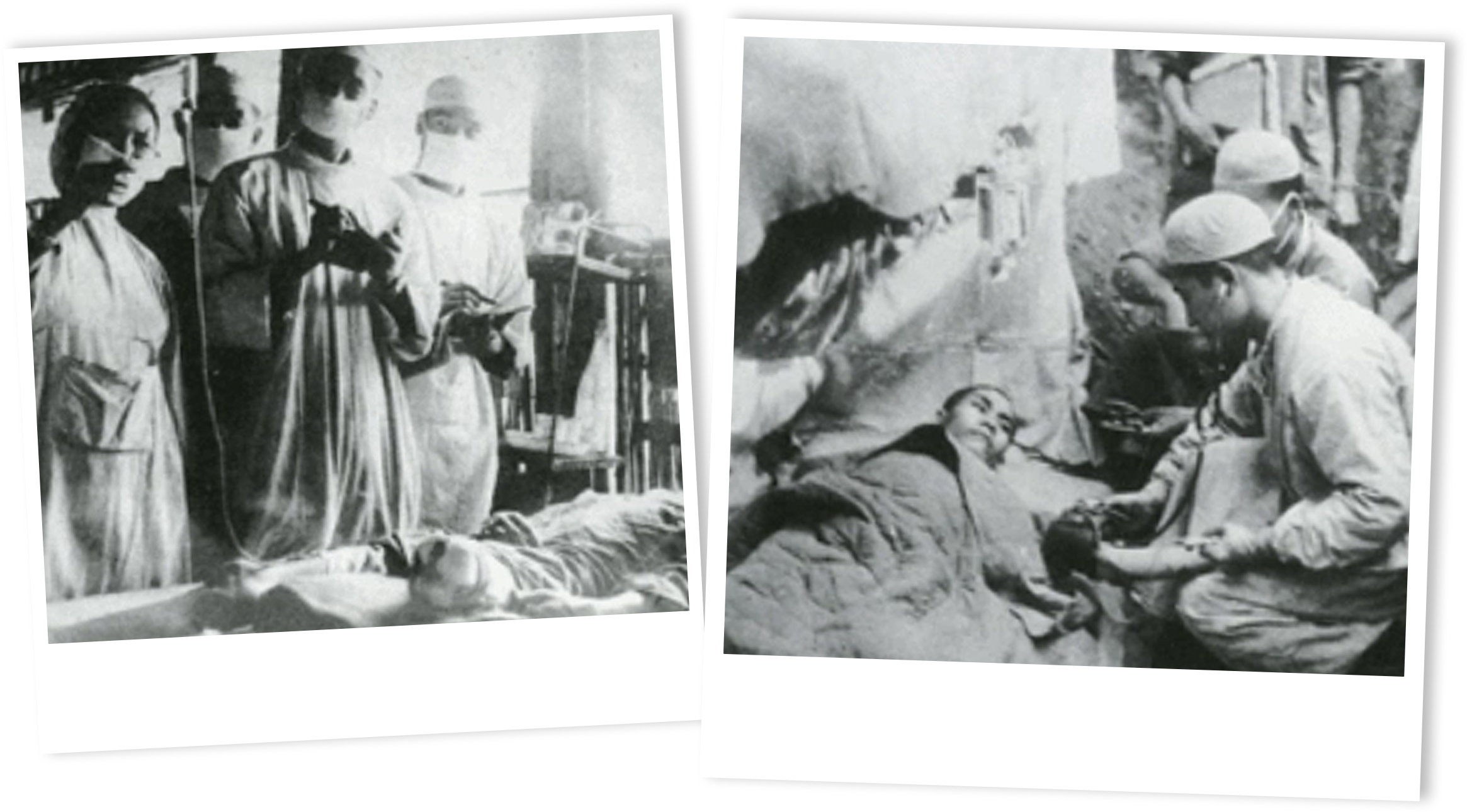
Medical equipment was lacking, technology was rudimentary, the working environment of doctors was extremely difficult, especially lighting conditions were not guaranteed.
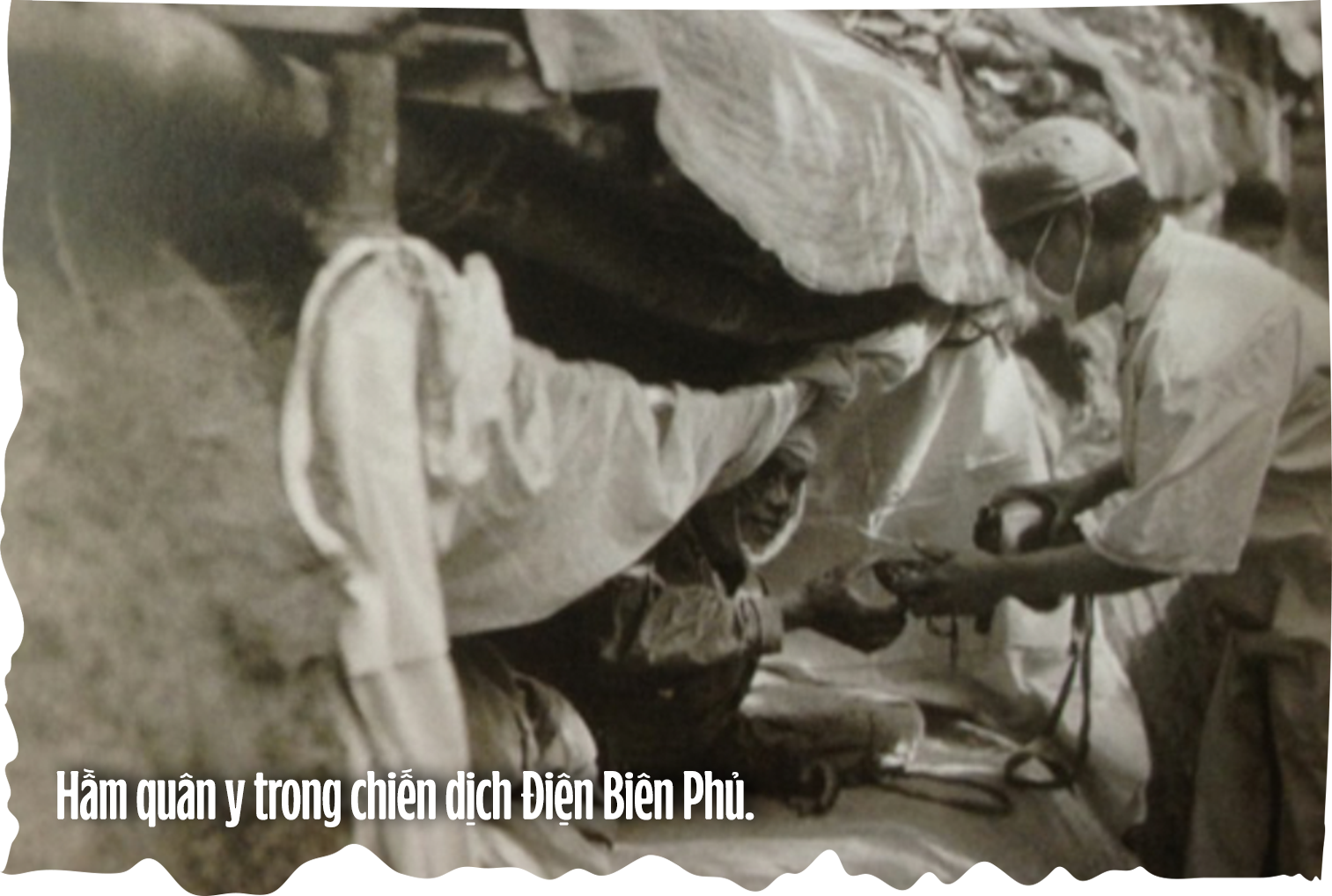
A military medical bunker in Dien Bien Phu Campaign
According to the military medical general, initially the stations used a few lanterns, but the light was not enough to illuminate deep into the abdomen and chest cavity. At that time, the Department of Military Medicine popularized the initiative to use electric light by taking a dynamo light from a bicycle and installing a hand-cranked generator, rotated by a nurse or a civic worker.
“Bicycle lights were requisitioned from convoys of civic workers and had a power source emitted from bicycle dynamos equivalent to 12V electricity. That way, we had enough light to operate and save the lives of many wounded soldiers in the dark bunker”, Mr. Tu recounted.
When asked if he ever “flinched” in surgeries when his medical knowledge was not really solid, Major General Nguyen Tu laughed heartily: “Thinking back, it was indeed risky, but at that time it was unadvoidable. In the midst of such difficult times, if we hadn’t carried out surgeries, the survival rate of wounded soldiers would have definitely been zero, but if you had determined to do so, the result would have definitely been better than zero. Soldiers held guns to protect the Fatherland in front of the enemy’s invasion, the military medical force and I protected the soldiers from death.”
NOT ONLY PROVIDING TREATMENT, BUT ALSO HELPING SOLDIERS STAY HEALTHY
Besides treatment, the military medical force had to ensure the health of officers and soldiers participating in the campaign. During the Dien Bien Phu Campaign, malaria, dysentery, and weakness due to vitamin deficiency were rampant, greatly affecting the soldiers’ health.
Especially in the last months of the campaign, it started to rain a lot, so the trenches were muddy, many soldiers’ clothes and shoes were torn, they had to walk barefoot, skin diseases developed strongly, and lack of sleep lasted for a long time, the health of the soldiers decreased greatly, especially in the units that faced the French colonialists day and night in the Dien Bien basin. In many units, the number of healthy troops was only 40%.
According to Mr. Tu, faced with that dangerous situation, doctor Tu Giay – Head of the Epidemic Prevention Subcommittee – Military Medical Campaign Committee, submitted to the Commander-in-Chief for promulgation of 10 things to do to maintain health.
For example: must sleep under mosquito nets, must take anti-malaria medication as prescribed, 2 pills every 5 days; must not drink plain water; must not eat raw food, inflated canned meat, food or water left behind by the enemy without being inspected; must ensure a minimum of 6 hours of sleep per day and 1 hour of rest; regularly sweep and clean the living area, the sleeping cellar having planks…
“The 10 things military medicine proposed was completely approved by General Vo Nguyen Giap, but the General added the 11th thing. That is, those who did well should be rewarded, those who did not follow proper hygiene discipline must be criticized”, the veteran recalled.
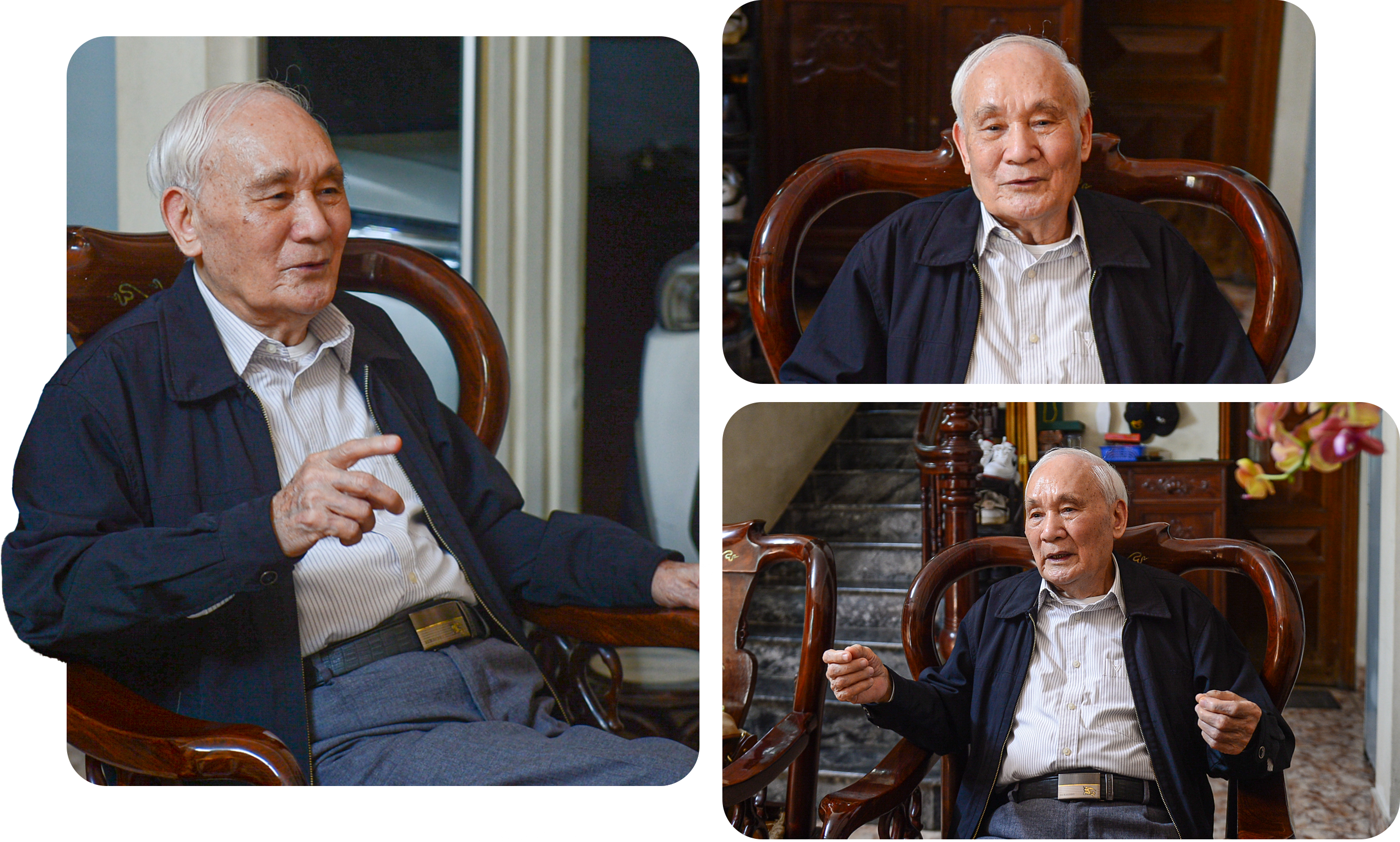
Major General Nguyen Tu emphasized that immediately after promulgating this special regulation, the 308th, 312th, 316th, 304th, 351st Regiments along with the military medical units of the units implemented it very strictly, bringing immediate results because of its specificity, practicality and scientific nature.
“The regulations had fundamentally resolved the negative mindset, temporary and unscientific habits of our soldiers in the past. On that basis, party committees and officials had better conditions to take care of soldiers’ health. Thanks to that, our soldiers had the best fighting strength to aim for final victory”, Mr. Tu said.
MILITARY DOCTORS WENT FIRST AND LAST
But in the memory of the military medical general, there is not only glorious victory but also full of pain and loss.
“I always remember the day we opened phase 2 of the campaign. There were many casualties, and I did not have much experience in deploying and organizing underground activities, so many soldiers died because they could not receive timely treatment”, Major General Nguyen Tu tried to hold back the tears that threatened to fall from the corners of his eyes.
It was the evening of March 30th and March 31st, 1954. His Brigade 316 was responsible for attacking all eastern bases, including A1, C1 and C2.
Accordingly, Regiment 174 was the main attacker, attacking A1 but was unsuccessful and suffered heavy casualties. The Regiment 98 was assigned to attack C1 and C2. C1 was able to attack but C2 was unsuccessful and suffered great losses.
“The Brigade’s treatment team took in about 1,000 wounded soldiers. With such a large number, because the attack was unsuccessful, the Command sent additional forces from Regiment 102 (belonging to Brigade 308) to continue fighting but it was also unsuccessful. In addition to the wounded soldiers of Brigade 316, there were also wounded soldiers of the Brigade 108 coming to my place”, Mr. Tu reiterated.
There were more than 1,000 wounded soldiers, but the military medical station of the Brigade 316 could only accommodate about 200 people. Because they had no experience in organizing treatment, the wounded soldiers brought there were congested at the classification stage.
“If one hadn’t been present, he would not have been able to imagine how fierce the scene was. There was a time when military doctors had to operate for 5 days and 5 nights in a row with almost no rest, only having time to chew rice balls after each shift.

“When starting a campaign, military medical forces had to go first to prepare and also go last to treat all their own wounded soldiers, the enemy’s wounded soldiers, and disinfect the battlefield. This work also had the support of other forces such as transportation, engineers…” – Major General Nguyen Tu
Once I went to check the classification stage, in some areas there were up to 20 comrades who died. Some comrades died because their injuries were too serious, but some comrades could not be cured in time. If we had done better, those comrades would have lived”, the old general said in a lower tone.
Mr. Nguyen Tu said that after winning, the soldiers withdrew from Dien Bien, there were still about 6,000 wounded soldiers remaining. The military medical force had to stay and organize the transport of wounded soldiers to local hospitals in two directions which are Thanh Hoa and Phu Tho.
Even though there were Gaz vehicles to transport, not all wounded soldiers could ride due to broken bones and coma. So, the military medical staff had to organize stretchers one by one.
“At that time, one idea is that the one being transfered by car would be taken to the mobile clinic, whereas those using stretchers would have to be transfered individually. Each stretcher is considered as “a family”, with civic workers as “brothers and sisters” following to serve and carry wounded soldiers. After the end of the campaign, it took more than a month for us to bring all the wounded soldiers back to the rear line”, General Tu said.
Mr. Tu said that the treatment of sick soldiers of the French colonialists was similar to ours, organized in underground hospitals.
“After the victory, we learned that the enemy had a field hospital with the capacity to accommodate 200 sick soldiers. But the number of casualties was so great that the hospital had to accommodate more than 400 soldiers. So, one person was on top of another, blood, flesh, and waste from the person above flows to the person below. That is also an obsession for military medical soldiers like me”, General Tu recounted.
With a humanitarian policy, we brought wounded soldiers of the French colonialists from the underground to the surface, treated the survivors and organized the return of prisoners of war.

French wounded soldiers were treated and cared for by military medical soldiers at the Dien Bien Phu front
Graduating from university, Mr. Tu worked at the Department of Military Medicine (Ministry of National Defense) and was sent to study in the Soviet Union.
“Returning from studying abroad in 1964, I became the Principal of the Military Medical School of the Northwest Military Region. After training two medical courses in the Northwest Region, at the end of 1965, I received the decision to be transferred to the Department of Military Medicine to accompany Hospital 211 to direct military medicine in the Central Highlands battlefield”, said Major General Nguyen Tu.
After 10 years of working in the Central Highlands battlefield, in 1976, Mr. Tu was sent to a postgraduate program in the Soviet Union. At the end of 1979, returning home, he continued to participate in the border war.
“After that, I was assigned to work at the Vietnam Military Medical University. After 2 years, I held the position of Deputy Director in charge of training. In 1995, I received the decision to retire according to the regime”, said Major General Nguyen Tu.
Although retired, Major General Nguyen Tu still participated in the Military Medical Science Council of the Ministry of National Defense to train Masters, Doctors, First-Degree Specialist, Second-Degree Specialist…
“After my retirement, I mainly engaged in scientific activities. Nearly 70 years of working with military medicine, going through many ups and downs, there was time I even faced death but after all I am extremely proud to have devoted myself to the nation’s independence”, General Nguyen Tu added emotionally.
GROUP OF REPORTERS (Photo: Dac Huy, VNA – Design: Huy Manh). TRANSLATION by Minh Khoa